 The science
Clinically tested. Built to help children with dyslexia learn to read.
Most reading apps skip clinical trials. The Poppins Learning reading therapy has been through two. One is already published. The second is complete, with its paper on the way.




A structured, multi‑part reading program, tested in randomized trials, reviewed by France’s national health authority.
Two randomized controlled trials of our rhythm- and language-based reading program in children with dyslexia, the first published in Scientific Reports (Nature Portfolio), 2025.
About twice the reading progress of weekly specialist care alone, over 12 weeks, in our largest randomized trial. The gain comes from adding Poppins Learning to the specialist’s care, not replacing it.
Nearly 6,000 children have taken part in our research and development across studies.
A rhythm- and language-based reading program in children with dyslexia
What we tested, and what we found
From early feasibility studies to randomized controlled trials: here’s how the evidence was built.
median: 42 games
3.5 sessions / week
descriptive statistics
Adjusted diff.: fluency +5.05 pts (p < 0.05) · speed +5.44 pts (p < 0.05)
of training
of follow-up
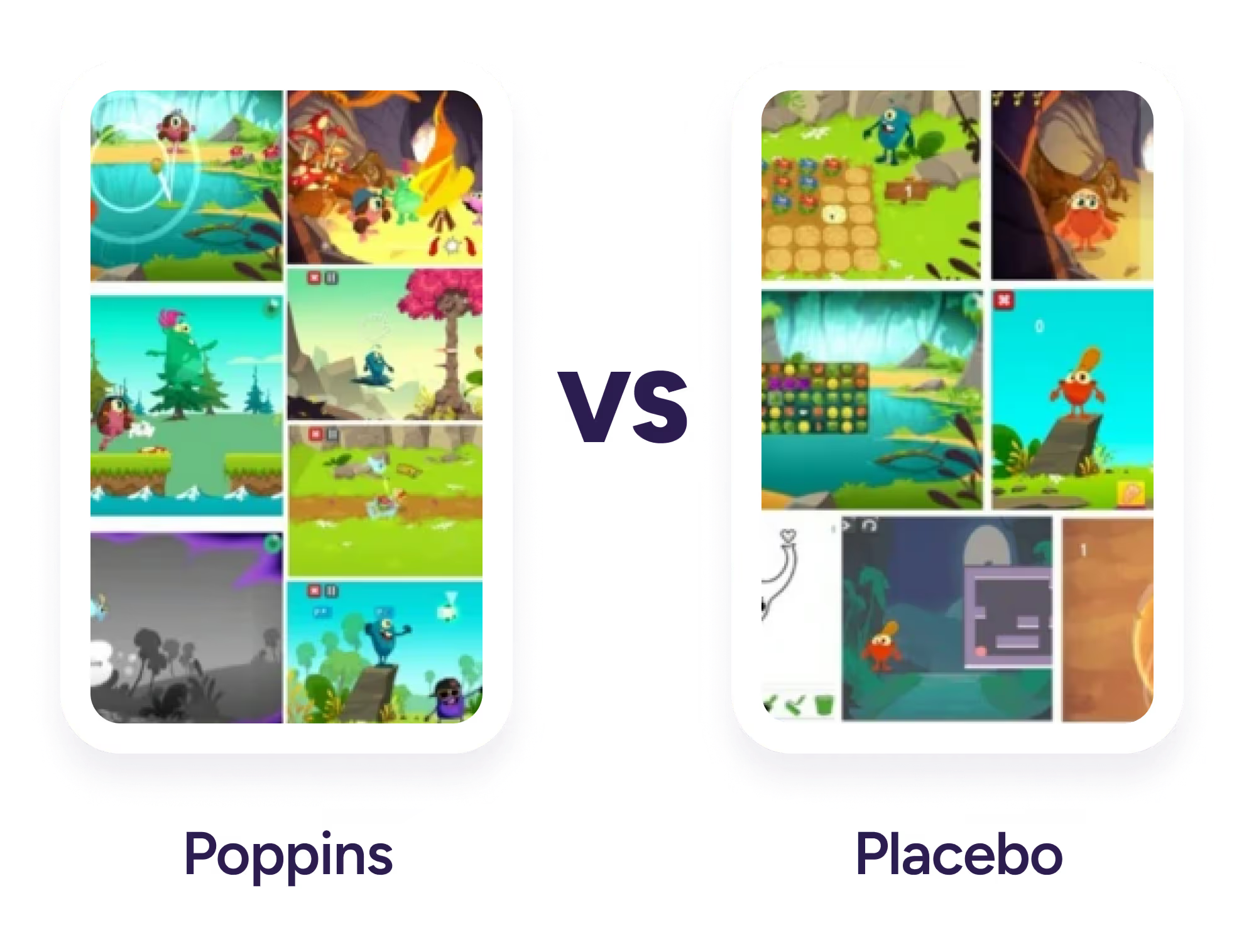
one every two weeks, instead of weekly
+8.6 vs +3.9 words, same 12 weeks

Our scientific advisors





Members advise Poppins Learning’s research program. Advisory roles are not an endorsement of specific product claims.
Rhythm and written-language training, together. Tested in two randomized clinical trials.
Start now with your childBringing Poppins Learning to a school? Request a demo →

Everything on the table
Can't find your answer? We're happy to help.
Contact us