Smart kid. Struggling reader. There’s a reason, and a way forward.
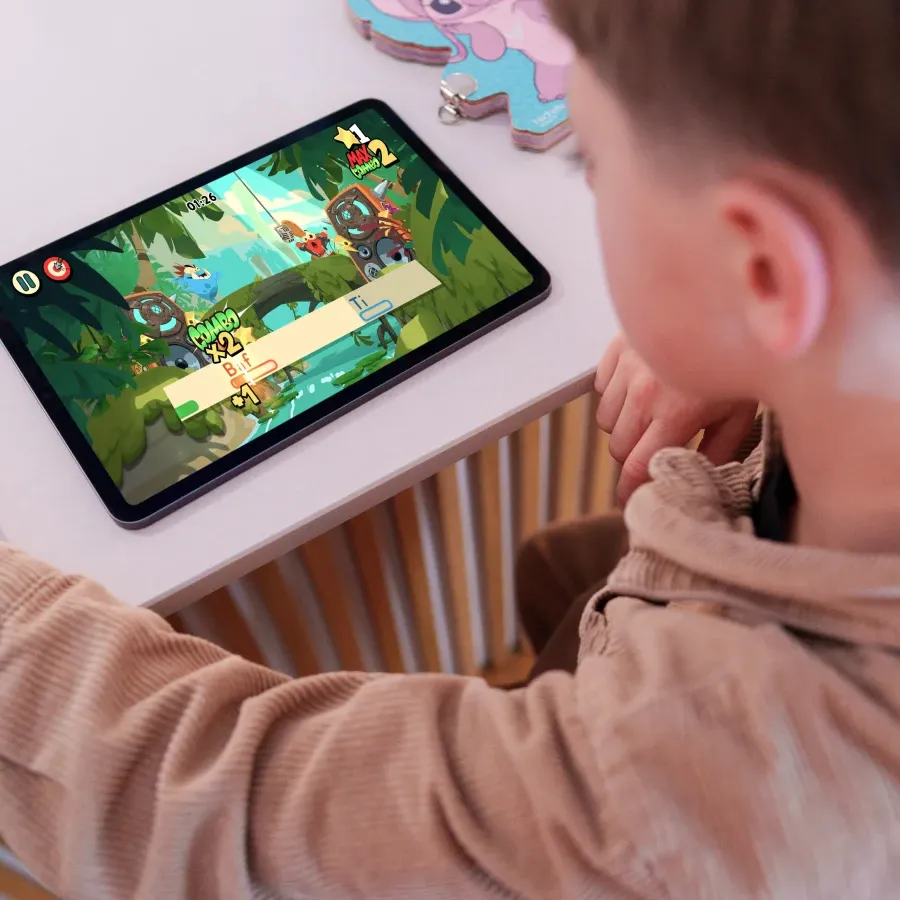
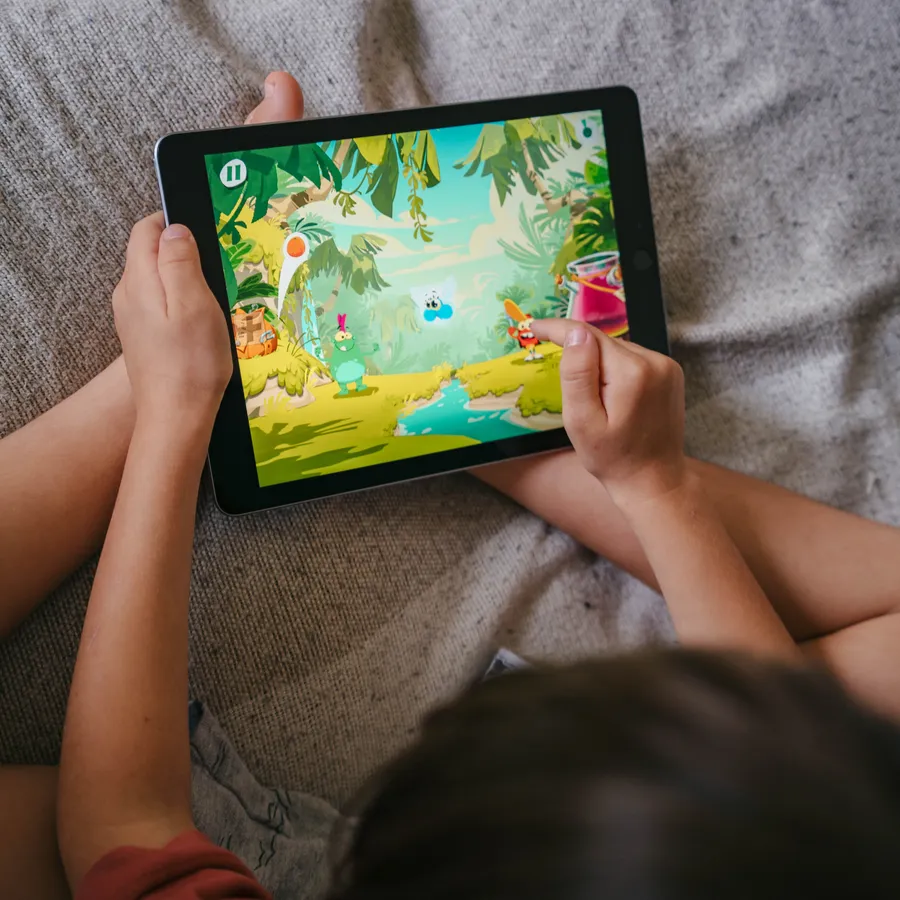
A rhythm-based daily practice that trains the sound-processing skills reading is built on, about 20 minutes a day at home, and it feels like play.
Cancel anytime.
See exactly what your child practiced.

Scientific ReportsFirst trial peer-reviewed · Nature Portfolio, 2025

Children's Hospital LADigital Health Award from their Innovation Studio

Built with neuroscientistsAligned with the Science of ReadingReading isn’t just letters. It’s processing.
You know your child is smart, and you’ve done your part: the phonics, the flashcards, maybe a tutor. Decoding is one layer of reading. Research points to another underneath: the sound processing the brain uses to turn letters into words.
Poppins Learning works on the layer underneath.

The phonics, the tutor, the specialist. That work was never wrong. Keep everything that’s working.
BELOW THE SURFACE: RARELY TRAINED IN A CHILD’S WEEKPoppins Learning adds rhythm-based daily reading therapy for that processing layer, designed to work alongside phonics and your child’s reading specialist, and studied in two randomized clinical trials.
2.2× reading-fluency progress.
Most reading apps have never been through a clinical trial. Poppins Learning has been through two. Our largest trial followed 306 children: those who added Poppins kept seeing their reading specialist, just half as often, and practiced at home in between. Twelve weeks later, they had made 2.2× the progress of children on the full weekly schedule.
Poppins Learning adds to your child’s reading support; it never replaces it. Final results, not yet published.
The three skills behind fluent reading
Daily rhythm-based play trains phonological awareness, reading fluency, and reading accuracy. Our two randomized clinical trials tracked all three.

Phonological awareness
The foundation of reading: hearing, separating, and using the sounds of language.

Reading fluency
Reading smoothly and at a natural pace, so meaning isn’t lost to slow, effortful decoding.

Reading accuracy
Getting the words right without slowing down: accuracy and fluency, trained together.
Twenty minutes a day to read better.

Why rhythm helps reading
Rhythmic training strengthens the sound processing reading depends on: the hearing-and-timing skills a child uses to break words apart and put them back together.
Playing with words to build reading
Step-by-step exercises to recognize sounds, play with syllables, and piece words together: the foundations of reading, one game at a time.
Why rhythm helps reading
Rhythmic training strengthens the sound processing reading depends on: the hearing-and-timing skills a child uses to break words apart and put them back together.
Playing with words to build reading
Step-by-step exercises to recognize sounds, play with syllables, and piece words together: the foundations of reading, one game at a time.
Easy for them, easy on you
Screen time, capped
The session ends on its own after 20 minutes.
Adapts to their pace
Rhythm and reading games adjust to your child, session by session.
No homework fights
A session your child actually wants to start, no nagging required.
A clear method with clear limits.

What parents tell us
"My daughter has been using Poppins for a few months now, and she still loves it."
"It's really well made, a lot like the exercises the reading specialist gives him, and it's fun. He really loves the app."
"For now, I can see my son enjoys the exercises and is getting his confidence back."
Four Saturdays with a specialist: $500. The whole month, with Poppins Learning: $99.

An hour a week with a reading specialist is precious. But a week has seven days. We built Poppins Learning for the other six: a daily 20-minute practice at home, so the time between sessions stops being lost time and starts being a thousand small wins.

Not ready to decide today?
Leave your email and we’ll send you the research recap, so you can come back when it’s the right time.