-2.png?width=1000&height=1000&name=Untitled%20design%20(1)-2.png)
Screens and Dyslexia: Tool or Distraction in the Classroom?

Poppins Team
Most teachers know that screens play a major role in children’s lives. Parents are aware too—96% say digital devices shape their child’s development. The challenge isn’t whether screens are present, but how they’re used. For students with dyslexia, this is even more critical: How do we separate recreational screen time from tools that genuinely support reading and learning?
What We Know About Screen Use
Research and classroom experience confirm what many educators already see: overexposure to screens can cause challenges for all students, including those with dyslexia. Parents frequently report:
- Behavior changes such as irritability or frustration
- Difficulty sustaining attention
- Delays in oral language development
Importantly, screens do not cause dyslexia or ADHD. These are neurodevelopmental differences. But unstructured, unlimited screen use can reduce language exposure, affect concentration, and overtax visual systems.
The question for teachers isn’t whether screens are “good” or “bad,” but how to make technology purposeful and balanced in school.
Technology as an Instructional Support
When used thoughtfully, technology can be a powerful ally for struggling readers. Speech-language pathologists and literacy researchers note that digital tools can:
- Provide consistent practice to reinforce classroom interventions
- Offer targeted accommodations that make learning more accessible
- Increase student motivation by turning practice into play
- In other words, screens can extend what teachers already do—if the right tools are chosen.
Practical Classroom Applications
Digital supports for dyslexia can fit seamlessly into instruction:
- Motivation and engagement – Structured apps break down tasks into achievable steps and keep students engaged with immediate feedback.
- Positive reinforcement – Many dyslexia-focused tools highlight success, encourage repetition, and build confidence.
- Assistive technology – Tools such as text-to-speech, speech-to-text, spellcheckers, audiobooks, digital organizers, and classroom scanners reduce barriers and free students to focus on comprehension and expression.
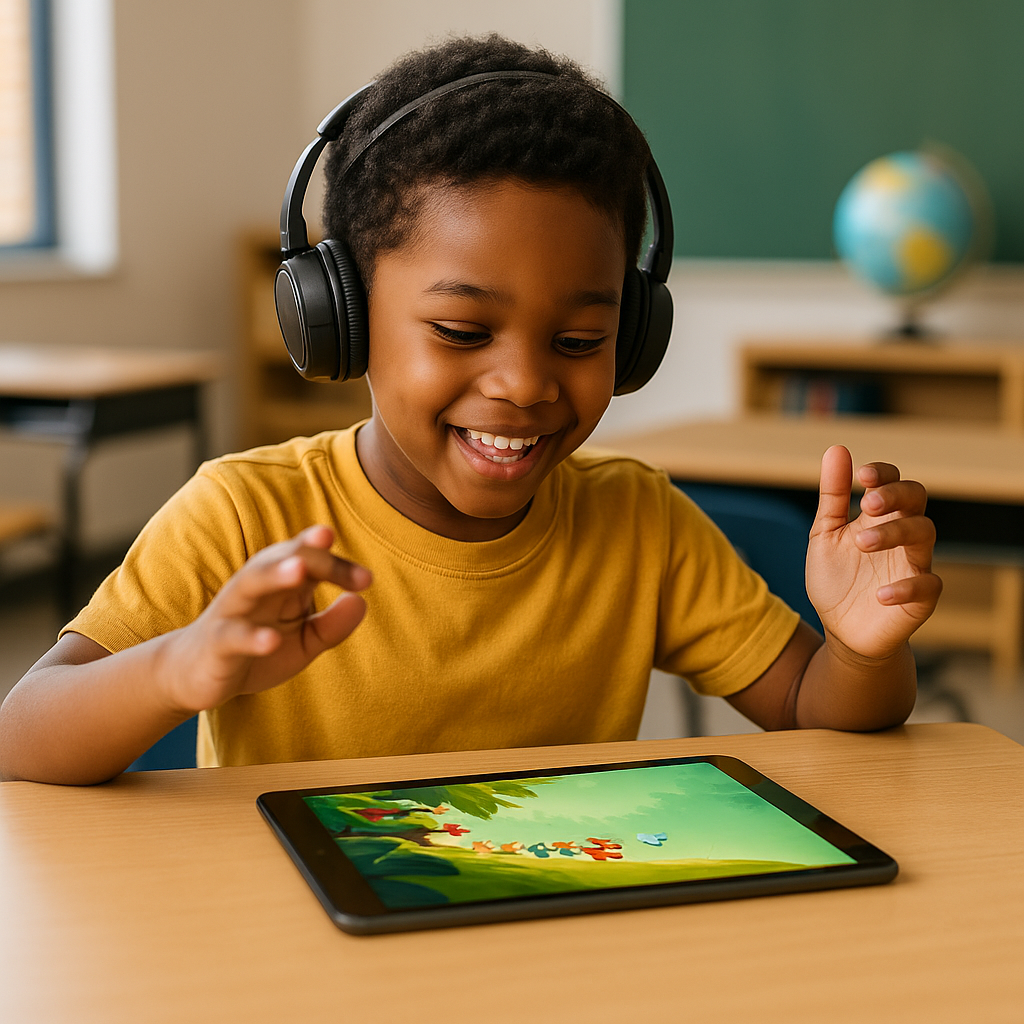
- Specialized programs – For example, Poppins combines rhythm-based reading games with short, structured practice (about 20 minutes per session). It’s one of the few tools clinically validated for students with dyslexia.
Balancing Screen Time
Experts emphasize that balance is key. Passive use, like watching videos, has limited benefit. Active use, such as reading with text-to-speech or practicing rhythm-based decoding, can strengthen skills. The goal is not to eliminate screens, but to integrate them intentionally alongside reading instruction, writing practice, and non-digital activities.
Partnering With Families
Educators also play a role in guiding parents. Encourage families to:
- Monitor screen use, not just in terms of minutes but in purpose
- Celebrate learning progress at home, not only grades at school
- Use apps as a bridge for conversation and encouragement
Key Takeaways for Educators
Technology is not a cure for dyslexia, nor is it the enemy. When applied with purpose, it can become a meaningful accommodation and practice tool that supports evidence-based reading instruction. The difference lies in balance, intentional use, and clear guidance from educators and families.